

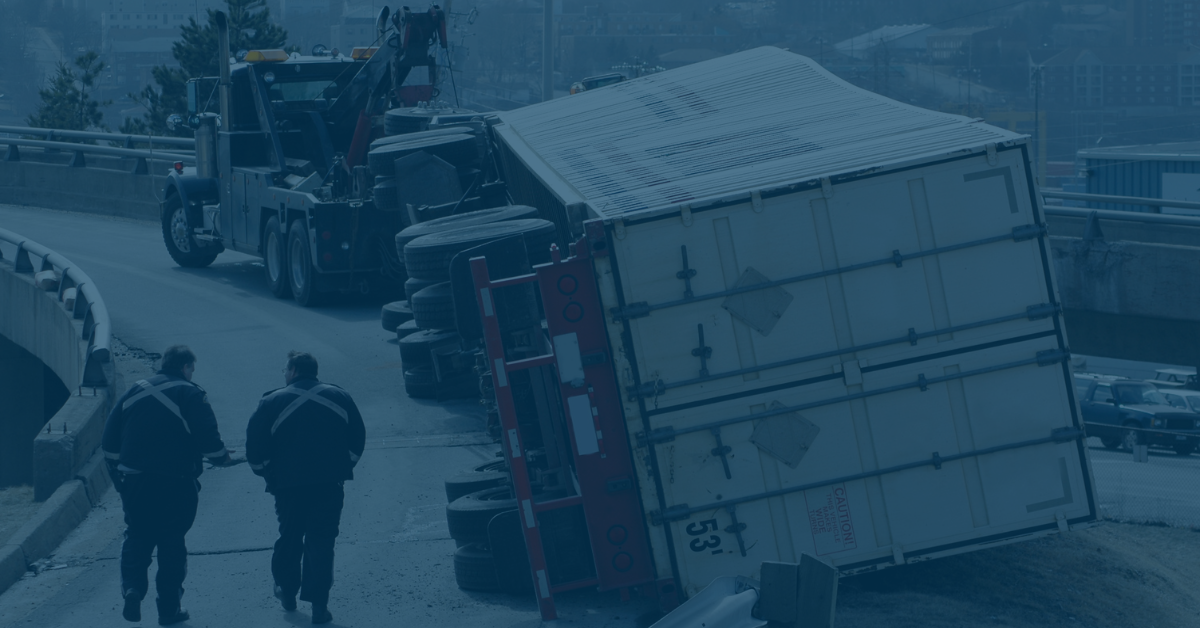
When a truck driver or trucking company causes a crash that leads to a spinal cord injury, the trucking company can often be held financially responsible along with the driver. In Louisiana, this is usually possible because employers can be held liable for the negligent acts of their employees while on the job. If the crash was caused by unsafe practices at the company level, such as poor training, unrealistic delivery schedules, or ignored maintenance, the company may face liability that goes beyond the driver alone.
Spinal cord injuries from 18-wheeler accidents are some of the most severe injuries a person can suffer. They can mean permanent paralysis, years of medical care, and a complete change in how someone lives their daily life. Understanding who can be held responsible, and how, is one of the first steps toward getting fair compensation.
Police reports rarely make clear which parties share the blame, or how much insurance coverage sits behind each one. A free case review from The Voorhies Law Firm can tell you what you’re actually working with before any deadlines start to matter. Call 504-875-2223.
Why 18-Wheeler Accidents Cause Such Severe Spinal Injuries
A fully loaded 18-wheeler can weigh up to 80,000 pounds, compared to an average car at around 4,000 pounds. That massive difference in size and weight means the force involved in a truck crash is often far greater than in a typical car accident.
This force is a major reason spinal cord injuries are so common in these crashes. The spine is especially vulnerable to the kind of sudden impact, crushing, or violent movement that happens when a large truck collides with a smaller vehicle. These crashes can cause a complete spinal cord injury, where all feeling and movement is lost below the point of injury, or an incomplete injury, where some function remains. Depending on where along the spine the injury occurs, the result can be paraplegia, affecting the lower body, or tetraplegia (also called quadriplegia), affecting all four limbs. The damage often comes from the violent forward-and-back motion of the neck and spine on impact, from the spine being compressed by a sudden vertical force, or from direct trauma when part of the vehicle intrudes into the cabin.
Common causes of these crashes include:
- Driver fatigue from long hours on the road
- Distracted driving, including cell phone use
- Speeding or following too closely
- Poor truck maintenance, such as brake failure
- Improperly secured cargo that shifts during transport
- Driving under the influence of drugs or alcohol
Each of these causes points to a different party who might share in the blame. That is why these cases often involve more investigation than a standard car accident claim.
Who Can Be Held Responsible for the Crash?
In many 18-wheeler accidents, more than one party may share responsibility. Identifying every liable party matters because it can affect how much compensation is available to cover the cost of a serious spinal cord injury.
Louisiana follows a pure comparative fault system. If an injured person is found partly at fault, their recovery is reduced by their percentage of fault rather than eliminated. Trucking companies and their insurers know this, which is why they often work to shift as much blame onto the other driver as possible. Being assigned some share of fault does not by itself end a claim.
The Truck Driver
The driver may be held responsible if their own carelessness caused the crash. This could include speeding, running a red light, or driving while fatigued or impaired.
The Trucking Company
Trucking companies can be held liable for a driver’s negligence under the legal principle of vicarious liability, sometimes called “respondeat superior.” This generally applies when the driver was acting within the scope of their job at the time of the crash.
A trucking company may also be held directly liable, separate from the driver, if the company:
- Failed to properly train or supervise its drivers
- Pressured drivers to violate federal hours-of-service rules
- Ignored known mechanical problems with a truck
- Hired a driver with a history of unsafe driving
- Failed to properly inspect or maintain its fleet
Other Potentially Liable Parties
Depending on the facts of the crash, other parties may also share fault, including:
- A cargo loading company, if improperly secured freight caused the crash
- A truck or parts manufacturer, if a mechanical defect played a role
- A maintenance contractor, if faulty repairs contributed to the failure
Each of these parties can be held liable under a different legal theory, which affects what has to be proven and what evidence matters. A cargo loading company is typically pursued through an ordinary negligence claim tied to how the freight was secured. A truck or parts manufacturer is usually pursued through a product liability claim, based on a design defect, a manufacturing defect, or a failure to warn, which involves different evidence than a standard negligence case. A maintenance contractor’s liability often comes down to the specific terms of what the trucking company hired them to inspect or repair, so the service contract itself can become important evidence.
How Trucking Company Liability Is Proven
Truck accident cases are usually more complex than car accident cases because trucking companies are required to follow federal safety regulations, and evidence of a violation can help establish fault.
Evidence that may support a claim against a trucking company includes:
- The driver’s logbooks and hours-of-service records
- Maintenance and inspection records for the truck
- The driver’s employment and training history
- Data from the truck’s electronic logging device (ELD)
- Drug and alcohol testing records
- Witness statements and police reports
At The Voorhies Law Firm, our 18-wheeler accident attorneys understand how to investigate these records early, before they can be lost, altered, or routinely discarded by the trucking company. Acting quickly after a crash can make a meaningful difference in preserving the evidence needed to hold the right parties accountable. Our firm has secured significant results in cases like these, including a $24 million recovery in an 18-wheeler collision case and an $18.9 million recovery in a similar 18-wheeler collision.
What Compensation May Be Available for a Spinal Cord Injury
Spinal cord injuries often come with a lifetime of medical needs, and the compensation available in a claim may reflect that long-term impact. Depending on the facts of the case, a claim could include compensation for:
- Emergency and ongoing medical treatment
- Surgery, rehabilitation, and physical therapy
- Assistive devices, such as wheelchairs or home modifications
- Lost wages and reduced future earning capacity
- Pain and suffering
- Loss of enjoyment of life
Because spinal cord injuries can affect a person for the rest of their life, it is important that any settlement or verdict accounts for future costs, not just the bills that have already come in. In one past case, our firm recovered $2.25 million for a client’s spinal cord injury, reflecting exactly this kind of long-term impact. You can review more of our results on our case results page.
Louisiana Law and Your Deadline to File a Claim
Louisiana calls its filing deadline the prescriptive period. Most other states call it a statute of limitations. Whatever the name, missing it can permanently end a claim no matter how strong the underlying case is.
The deadline recently changed. For most personal injury claims arising on or after July 1, 2024, Louisiana allows two years from the date of injury to file suit. Before that date, the deadline was one year, and that older one-year rule still applies to injuries that happened earlier, because the change was not made retroactive.
That creates a split worth paying attention to. A crash on June 30, 2024, and a crash on July 2, 2024, are governed by different deadlines even though they happened days apart. If you are unsure which applies to your situation, it is worth confirming quickly rather than assuming.
Certain claims also follow their own timelines. Wrongful death and survival actions, claims against government entities, and medical malpractice claims can each run on different clocks. An attorney can confirm which deadline governs a specific case.
Separate from the filing deadline, evidence has its own much shorter clock. Electronic logging device data, dashcam footage, and internal trucking company records may be overwritten or discarded on routine retention schedules long before any prescriptive period runs out. Sending a preservation letter early is often what keeps that evidence available.
Frequently Asked Questions
Who is responsible when a trucking company’s driver causes a spinal cord injury?
In many cases, both the driver and the trucking company may share responsibility. The company can often be held liable for the driver’s actions on the job, and it may also face direct liability for its own hiring, training, or maintenance failures.
Can I sue a trucking company directly for a spinal cord injury in Louisiana?
In many situations, yes. A trucking company may be sued directly if its own negligence, such as inadequate driver training or ignoring known safety issues, contributed to the crash. An attorney can review the specific facts of a case to determine which parties may be liable.
How much is a spinal cord injury claim worth after an 18-wheeler accident?
There is no fixed amount, since every case depends on the severity of the injury, the medical costs involved, and the impact on the person’s life and ability to work. Claims may account for both current and future medical needs.
What if the truck driver was an independent contractor, not an employee?
This can make a case more complicated, but it does not automatically prevent the trucking company from being held liable. Courts typically look at the right of control the company had over how the work was performed, not simply the label used in a contract. Even when a driver is classified as an independent contractor on paper, federal motor carrier regulations can still treat that driver as a statutory employee for liability purposes if the trucking company controlled key aspects of the job, such as routes, schedules, or vehicle requirements. Because this analysis depends heavily on the specific facts, it is worth having an attorney review the driver’s actual working relationship with the company rather than assuming the contractor label settles the question.
Speak With The Voorhies Law Firm About Your 18-Wheeler Accident
If you or someone you love has suffered a spinal cord injury in a Louisiana 18-wheeler accident, you do not have to face the trucking company’s insurers alone. The Voorhies Law Firm is ready to investigate your crash, identify every party who may be responsible, and fight for the compensation you may be owed.
Call us today at 504-875-2223 to schedule your free consultation. We will review the details of your case, explain your options, and guide you through every step of the process.